
Checking Criminal History in Washington
A sound Washington criminal history search starts by choosing the right record. WATCH supplies the public state compilation. Washington Courts helps locate filed cases, while the court of record supplies the official docket and documents. County agencies hold recent bookings, jail status, and incident reports. Washington DOC covers state custody. WASOR covers the public registry subset. None of these sources replaces the others, so a blank result in one system does not settle the question.
Start with a full legal name, date of birth, former names, and the county tied to the event. Names alone can point to the wrong person. Fingerprints are the conclusive way to tie a Washington State Patrol record to an identity.
- Use WATCH for the statewide public conviction-history compilation.
- Search Washington Courts for a filed case and note the case number and court.
- Open the Washington county directory for the local jail, sheriff, police, and court source.
- Check DOC, the registry, or federal systems when the record belongs there.
- Order a fingerprint-based personal review when identity and completeness matter.
Note: A statewide search is a starting point, while the originating Washington agency remains the source for a certified or corrected record.
Washington WATCH Search Fields
Washington Access to Criminal History, known as WATCH, is the Washington State Patrol public portal. The official WATCH overview shows the account entry points and explains the public product.
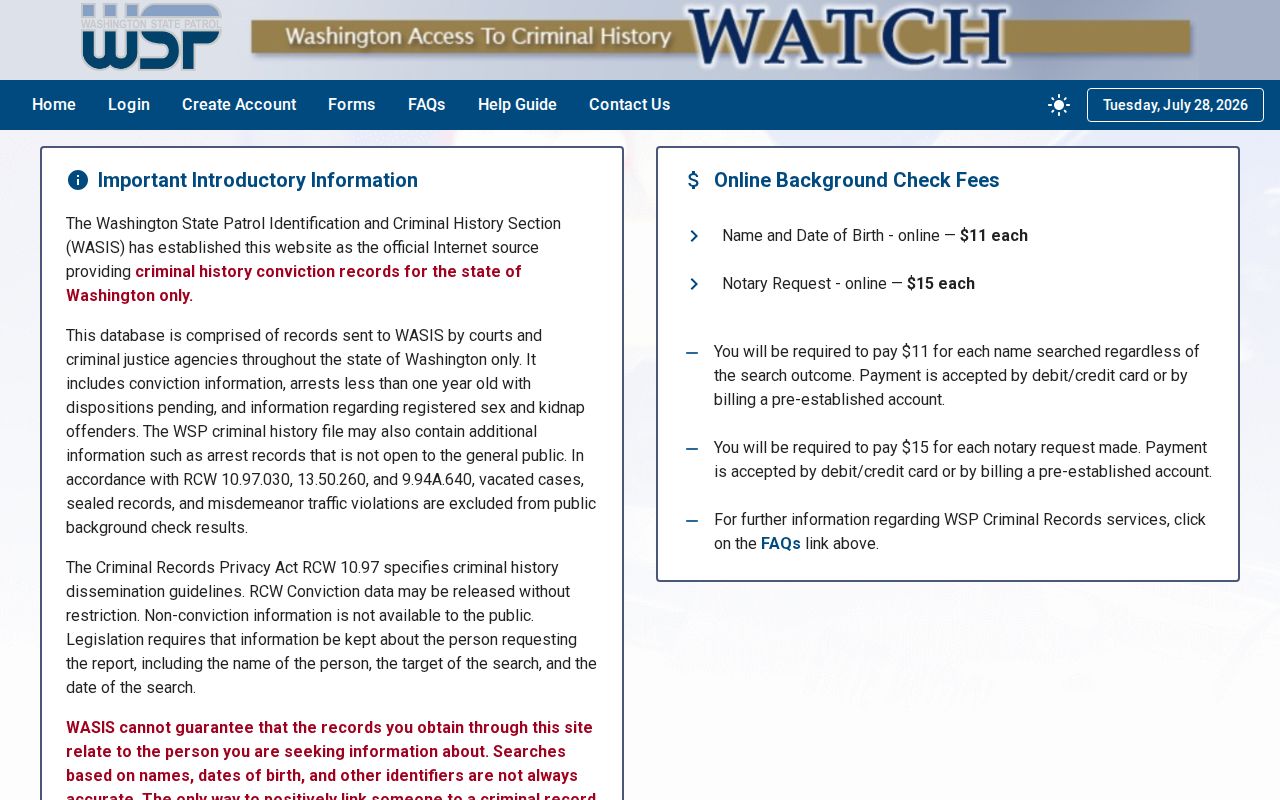
The screen leads to an account-based name and birth-date search. An account asks for contact and address details, then requires an acknowledgement of the charge, the limits of name matching, and the 60-day result purge. Search-subject fields are simpler, but spelling and former surnames can change what appears.
| Field | Required | Why It Matters |
|---|---|---|
| First and last name | Yes | Core name-match terms |
| Date of birth | Yes | Narrows people with similar names |
| Middle or former name | When known | Helps find variant Washington entries |
| Account acknowledgement | Yes | Confirms the fee and identity limits |
Inside the Washington Criminal History Repository
The Washington State Patrol Criminal Records Division runs the statewide repository. Its Identification and Criminal History Section administers the Washington State Identification System, or WASIS, and the fingerprint-based Automated Biometric Identification System. Police, jails, prosecutors, and courts send structured records into that system. WSP compiles them; it does not become the court or police agency that made the source file.
The public WATCH return can include Washington conviction information, arrests less than one year old with a disposition still pending, and registration information. It does not expose older nonconviction data, sealed or vacated records, misdemeanor traffic violations, or a full local case file. The WSP criminal-history service overview shows the agency channels used for checks and record review.
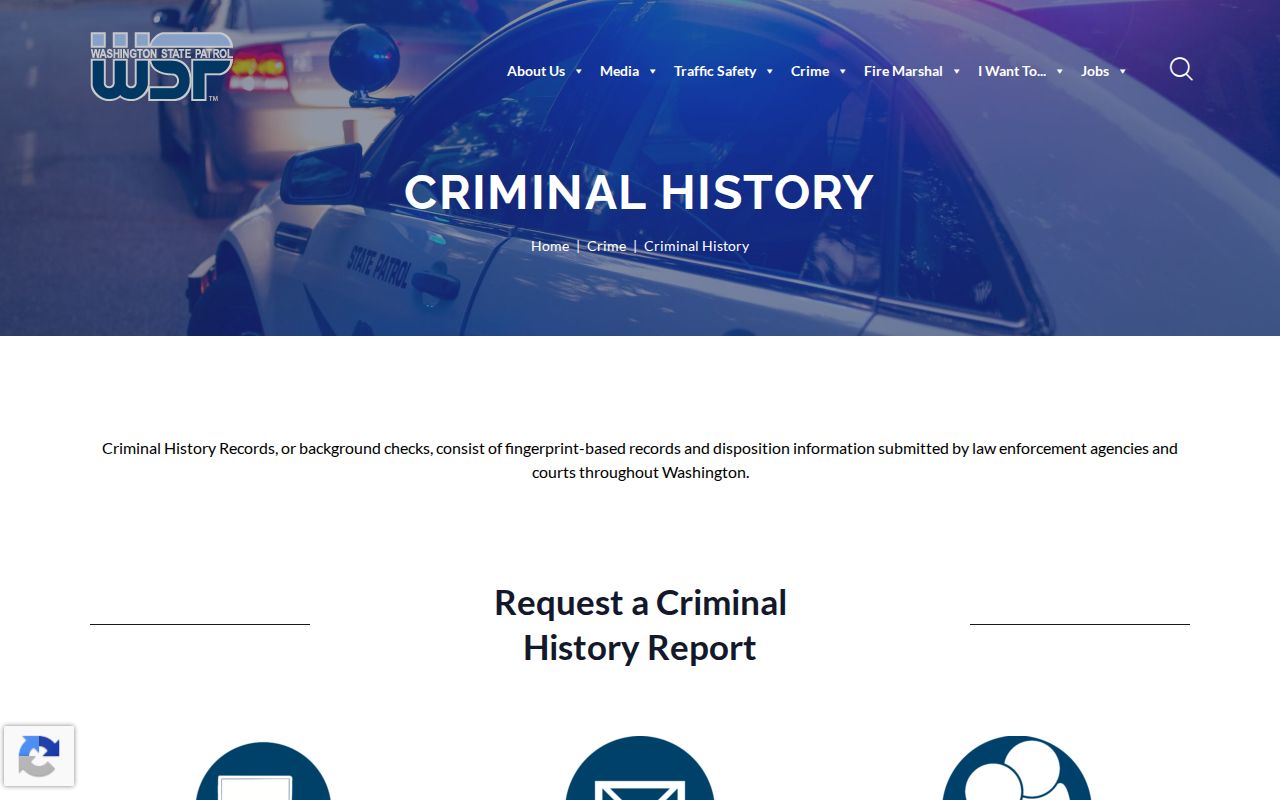
This official service layer is the basis for the deeper Washington State Patrol record guide. A name match is still not a fingerprint identification.
Washington Dispositions Reach WATCH
A Washington rap sheet grows through a chain of separate acts. A qualifying booking begins an arrest cycle. The arresting agency transmits fingerprints and a transaction-control number. The prosecutor then files, changes, or declines charges. When a fingerprinted charge ends, the responsible agency, prosecutor, or court reports the final result. WSP uses the control number and identity data to attach that outcome to the correct arrest cycle.
Washington flow: Arrest › Booking › Fingerprints › Court Disposition › WASIS Rap Sheet
Gaps can arise from a bad print card, a missing control number, an unreported disposition, entry delay, or a name variant. WSP warns that its database may omit arrests and outcomes. If WATCH lacks a dismissal or final judgment, get the signed record from the source court first. Then ask that court or agency to fix its entry before sending proof to WSP.
Note: Washington county records may be newer than the compiled state return because local filing and state reporting do not occur at once.
Washington Criminal Check Fees
Washington offers several official products, each with a different identity method and scope. WATCH charges for each name search even when no match appears. The mailed name request costs more and takes longer. A Washington fingerprint-based request costs more because it compares biometrics. The FBI product covers a subject's national identity history, while the state court index is free and answers a different question.
| Channel | Base Fee | Coverage |
|---|---|---|
| WATCH online | $11 per search | Public Washington history product |
| WSP mailed name and DOB | $32 | Public Washington name product |
| WSP fingerprint request | $58 | Biometric Washington match |
| WSP Olympia print capture | $16 | Fingerprint service, added to record fee |
| FBI identity summary | $18 | Subject's national FBI summary |
| Washington Courts index | Free | Case index, not a rap sheet |
Local fingerprint, court-copy, certification, and police-report charges vary. The current portal price controls if an older paper form shows a different notary amount.
Washington Statewide Record Systems
Washington records stay in systems built for distinct jobs. WATCH compiles the public state history product. Washington Courts points toward court cases, but the clerk keeps the official file. DOC tracks state incarceration and community custody. WASOR publishes the registry subset allowed by state law. County jails keep recent local custody records. Those boundaries explain why one person or event may appear in several places with different dates or fields.
| System | What It Holds | Run By |
|---|---|---|
| WATCH / WASIS | Public Washington conviction history and limited pending arrests | Washington State Patrol |
| Washington Courts Search Case Records | Statewide court reference index | Washington judicial branch |
| Washington DOC Incarcerated Search | State incarceration records | Washington DOC |
| Washington Sex Offender Public Registry | Statutorily public registrants | WSP, WASPC, and county sheriffs |
| County jail and court systems | Bookings, local custody, and original case files | Local custodians |
Reading Washington Criminal Records
A Washington record can contain an identity segment, one or more fingerprint-linked arrest cycles, booking charges, prosecutor action, and a reported court result. It may also list aliases, a state identification number, the contributing agency, an arrest number, and a transaction-control number. Read each cycle from arrest through disposition. A booking charge is not necessarily the charge that was filed, and a filed charge is not necessarily the final judgment.
- WASIS
- Washington's central computerized criminal-history system.
- ABIS
- The biometric system used to match fingerprint identities.
- Disposition
- The reported outcome of a charge, such as dismissal or conviction.
- Vacation
- A Washington court remedy that withdraws or sets aside qualifying guilt and dismisses the charge.
- GR 31
- The main Washington rule for public access to court records.
Note: A vacated Washington conviction is not the same as a sealed court file, and neither process should be inferred from an old downloaded copy.
Washington Warrant Record Checks
Washington has no dependable public statewide warrant search. Law enforcement uses systems such as ACCESS and NCIC, but public verification usually starts with the likely court and county. A bench warrant may follow a missed appearance or failure to comply. An arrest warrant begins with judicial authority. Search-warrant papers may stay sealed while disclosure could harm an investigation.
Search the likely Washington court docket for warrant or failure-to-appear entries. Then contact that court and the relevant sheriff or city police warrant unit. County most-wanted lists can help, but they are not full warrant indexes. DOC has a separate search concept for some community-custody warrants, not every warrant in Washington. Safe resolution can depend on the court, bail terms, and the warrant type, so legal advice may be needed before appearing.
Types of Washington Criminal Records
Washington criminal records reflect the office that created them. Incident narratives remain with the investigating police, sheriff, WSP district, campus agency, or tribal agency. Jail staff create the booking record. Prosecutors and clerks create the filed case layer. WSP compiles structured arrest and disposition data. DOC keeps state custody and supervision information, while county sheriffs collect registration details for the state registry.
- Arrest and booking records: local custody snapshots that do not prove guilt.
- Criminal court case files: filed charges, hearings, orders, pleas, judgments, and sentences.
- Repository rap sheets: fingerprint-linked Washington cycles and reported outcomes.
- Warrant records: court and law-enforcement entries with uneven public access.
- Custody and supervision records: county jail, DOC, local probation, community custody, or federal data.
- Registry records: risk-based public information, not a list of every Washington registrant.
Washington Custody Record Layers
Custody searches follow a three-system rule. A county jail holds many people awaiting trial and some serving local sentences. Washington State Department of Corrections holds people transferred to state custody for felony sentences and also runs community corrections. The Federal Bureau of Prisons covers federal incarceration. A search in one layer says little about the other two.
The Washington DOC Incarcerated Search accepts a DOC number or last name, with first name optional.
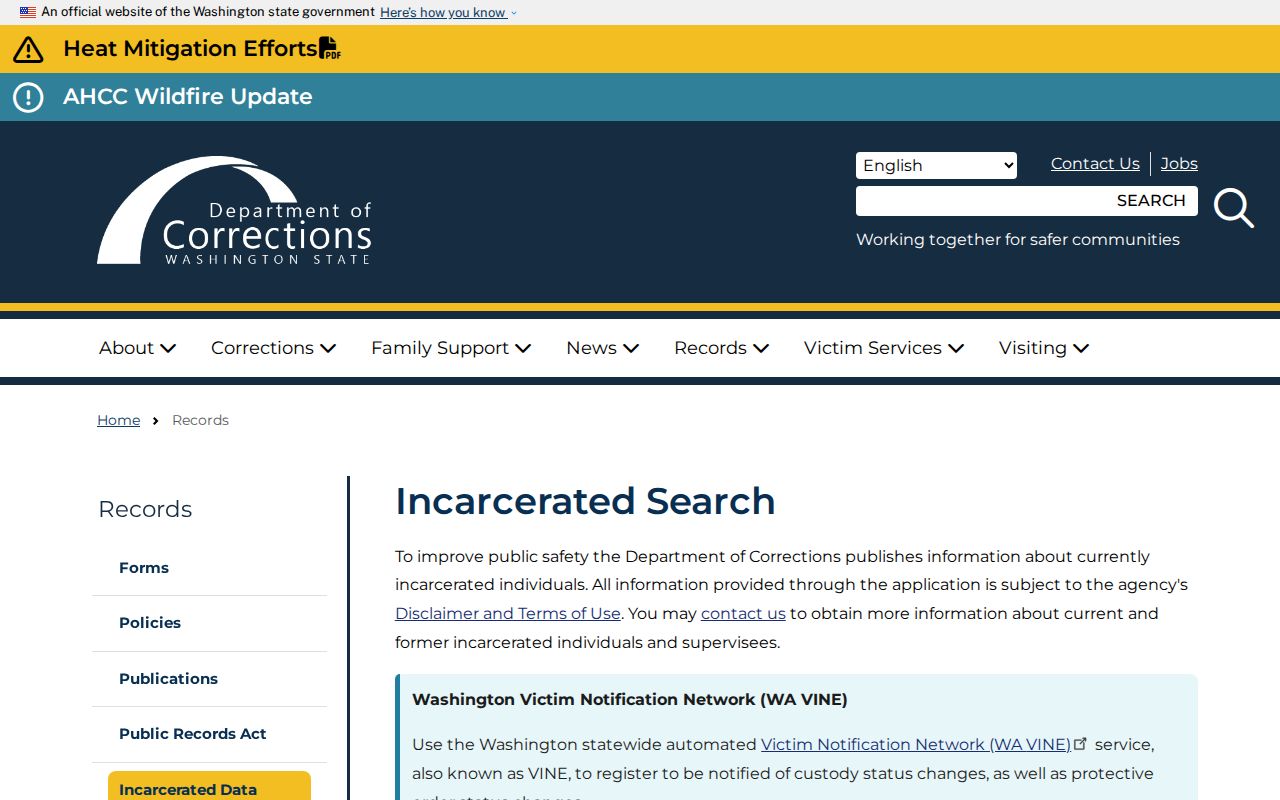
The result is useful for state location and status, but it is not a county jail roster or a full Washington criminal history. DOC reports 10 prison facilities and 13,966 people across prison, reentry, and out-of-state locations as of September 30, 2025.
The current Washington prison list is the right place to confirm the active facility set.
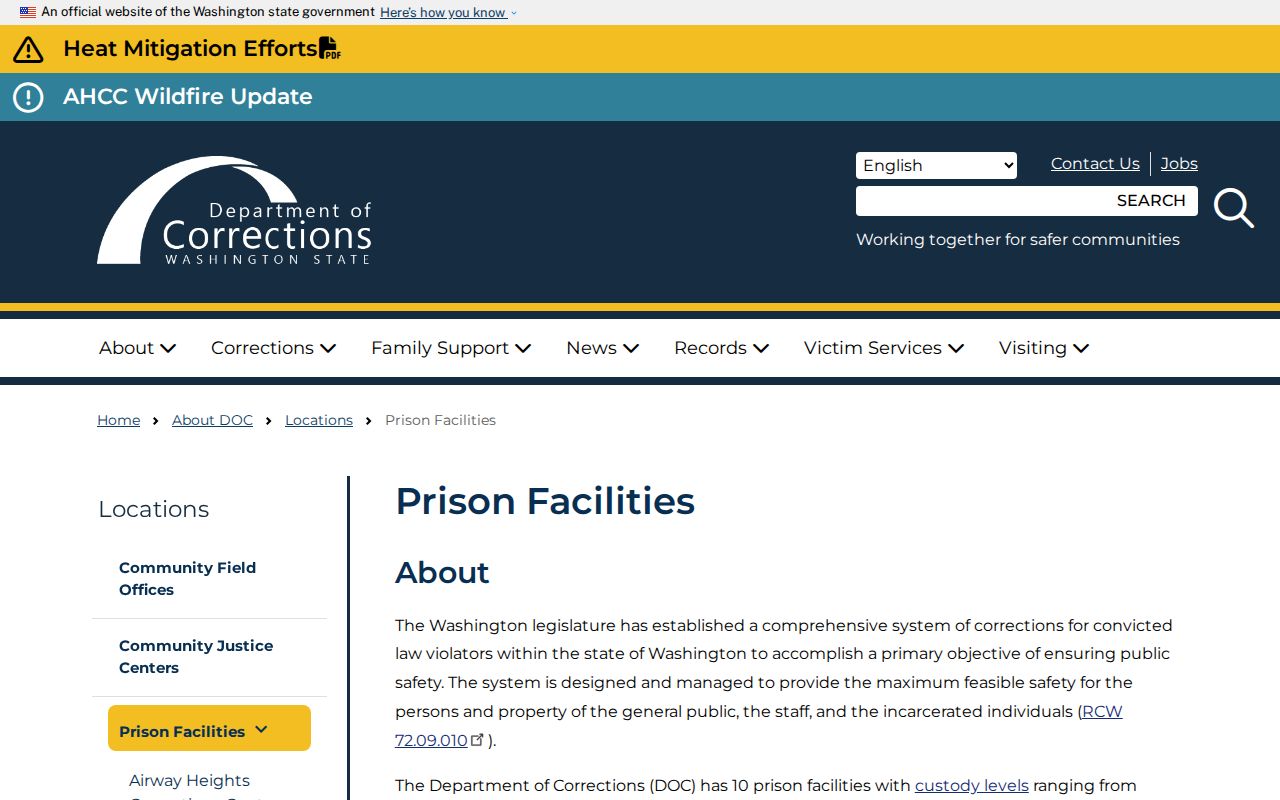
An older official prison-page snapshot can use a different count because facilities and reporting groupings change.
The archived Washington prison presentation illustrates why the current agency headline must control.
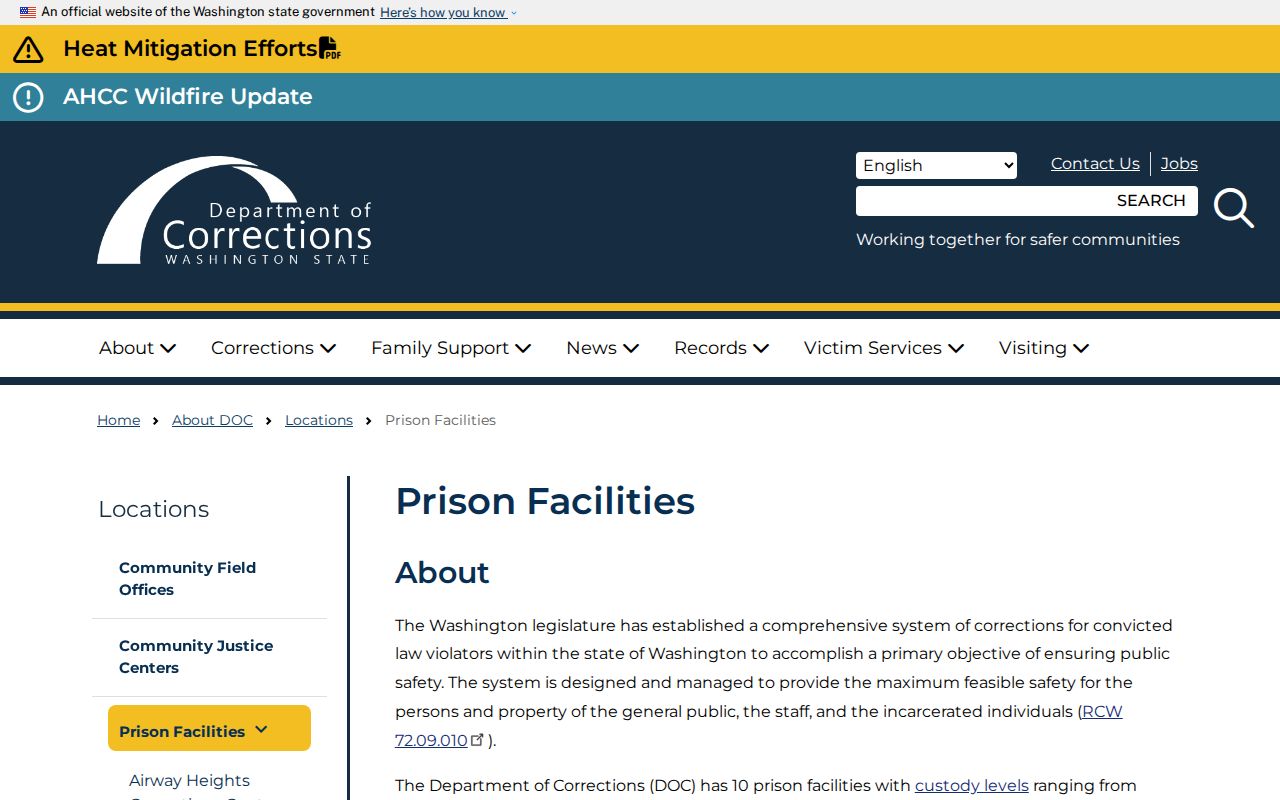
Use the live DOC location page before treating any facility total as current.
Washington Supervision Record Paths
Washington supervision is hybrid. DOC Community Corrections handles much felony postrelease supervision and reports about 18,000 active cases through a statewide network of field offices. District and municipal courts oversee local misdemeanor probation, which can run on different practices. The Indeterminate Sentence Review Board makes decisions only for defined groups, including older indeterminate cases and certain later sex-offense or youth-sentence matters. It is not a general parole board for every modern sentence.
No single public portal proves all Washington probation, community-custody, or ISRB status. Check the sentencing docket, DOC information, and the appropriate local probation office. A community-custody violation may lead a Community Corrections Officer to suspend status and arrest the person pending a decision. Local probation violations return to the sentencing court. VINELink can send custody notices where a participating facility reports them, but it does not establish all supervision terms.
Vacating Washington Criminal Convictions
Washington calls its main adult conviction-clearing remedy vacation. The request goes to the sentencing court, not WSP and not simply the county where the person now lives. Eligibility depends on the offense, completion of sentence, waiting periods, later convictions, and pending charges. A granted order permits the plea or verdict to be withdrawn or set aside and dismisses the charging document. It also limits ordinary dissemination, but it does not automatically seal the court docket.
The Washington Courts vacation form collection provides the official starting forms.
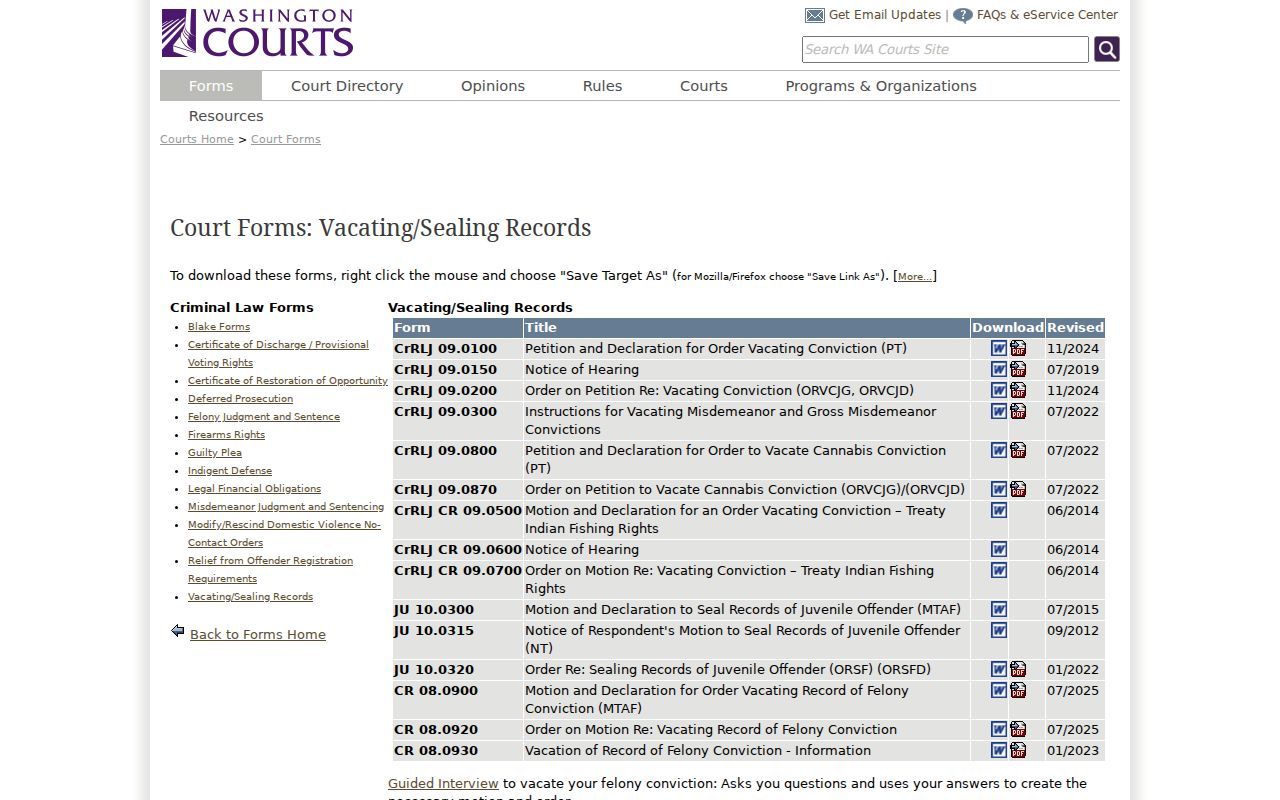
After an order is signed, confirm that the county docket changed and then check the fingerprint-based WSP record. GR 15 sealing and deletion of qualifying nonconviction law-enforcement data are separate processes.
Washington Public Access Laws
The Washington Public Records Act, chapter 42.56 RCW, governs access to identifiable records held by state and local agencies. It does not force an agency to answer a question or create a new record. Courts follow GR 31 for case-record access. The Criminal Records Privacy Act in chapter 10.97 RCW separately controls criminal-history dissemination, including the line between conviction and restricted nonconviction information.
Key Washington authorities:
Chapter 42.56 RCW governs agency public-record requests and exemptions.
Chapter 10.97 RCW controls collection, access, correction, and dissemination of criminal history.
General Rule 31 governs access to Washington court records.
RCW 9.94A.640 sets the felony vacation route.
RCW 9.96.060 addresses qualifying misdemeanor and gross-misdemeanor vacations.
Police reports may be redacted for an active investigation, victim privacy, juvenile protection, medical facts, or safety. Registry data has its own statutory publication rules. Public access is therefore record-specific, not a promise that every Washington justice record is online.
Federal Records Beyond Washington
Federal prosecutions in Washington do not become Superior Court cases or WATCH case files. The state has Eastern and Western federal judicial districts. PACER is the official federal docket system, while the FBI Identity History Summary is a fingerprint-based subject request for national data. Federal custody belongs in the BOP locator. These channels should be searched when the known agency, court, or offense points to federal jurisdiction.
The official PACER portal requires registration and charges 10 cents per page, usually capped at $3 per document; quarterly charges of $30 or less are generally waived.
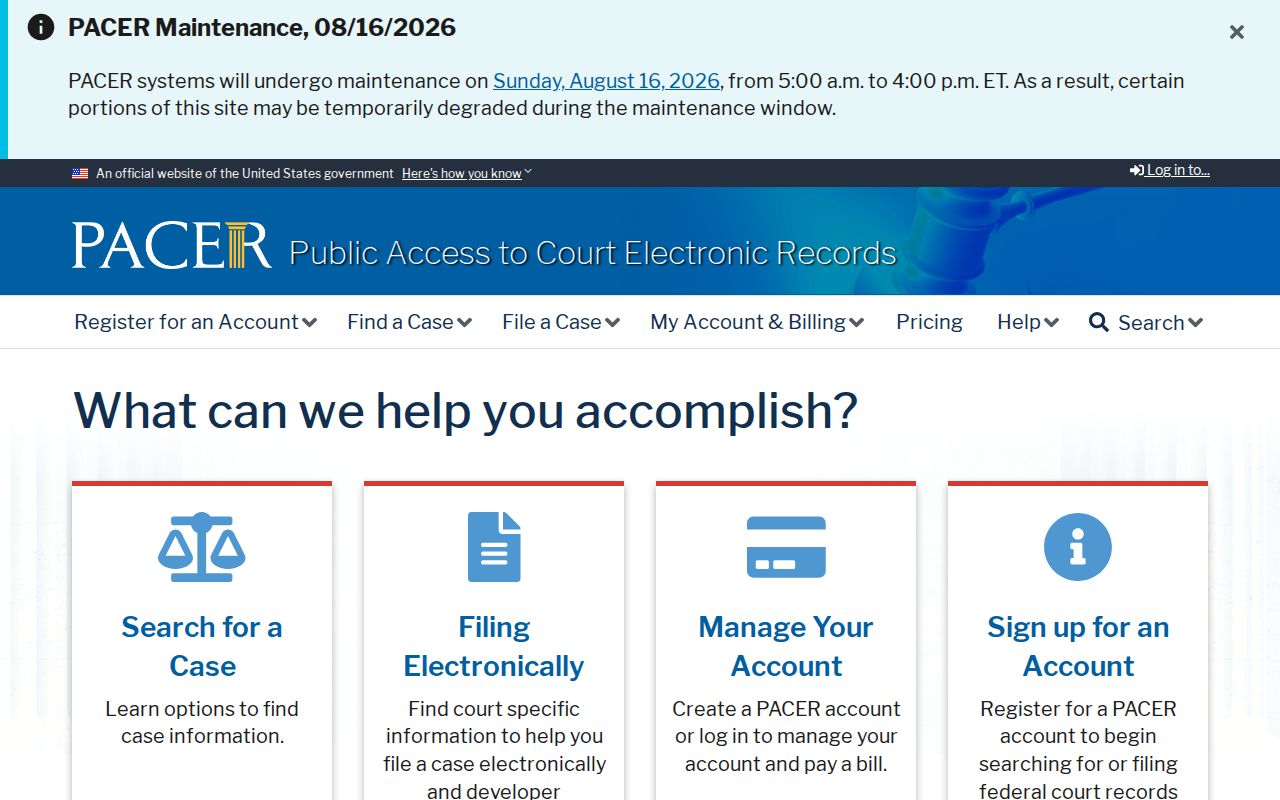
PACER covers the federal docket, not Washington county cases. An FBI identity summary costs $18 before any fingerprint-capture or approved-channeler charge.
Washington Police Record Requests
Request the report from the agency that made it. WSP keeps its own incident reports and the statewide collision repository, not every city or county narrative. A focused Washington Public Records Act request should give the incident date, place, case number if known, and a clear description. The initial agency response is due within five business days, though production can take longer and lawful redactions may apply.
The WSP collision-record channel separates officer reports, citizen filings, and de-identified data.
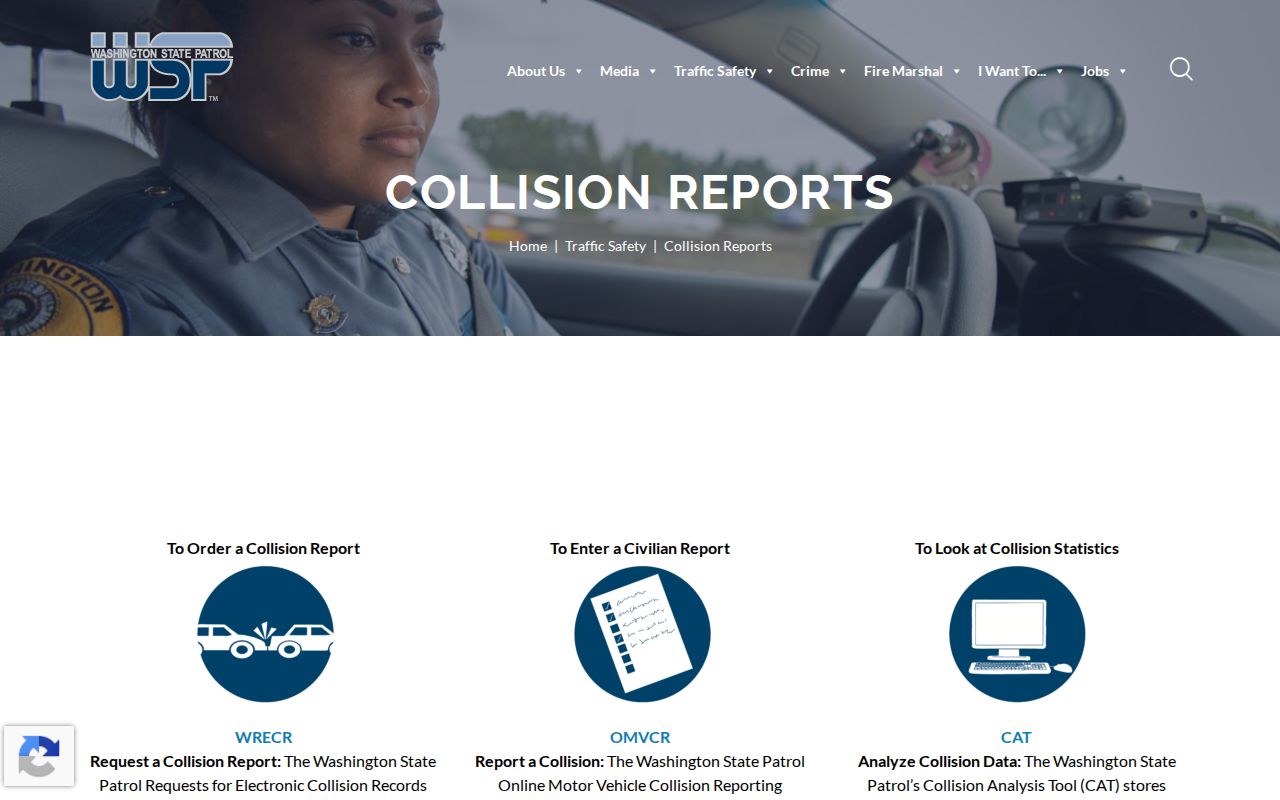
Officer collision reports can take two to four weeks. A mailed copy is listed at $10.50. City police and county sheriff reports still must be requested locally.
Criminal Records by County in Washington
Washington arrests, bookings, police reports, and original court files begin locally. The six most populous counties below cover the state's largest metro record systems, but every one of Washington's 39 counties has a dedicated criminal-record site. Use the county tied to the arrest, filing, jail stay, or report. The county seat note helps identify the local government center.
The official Washington county map confirms the statewide county layout.
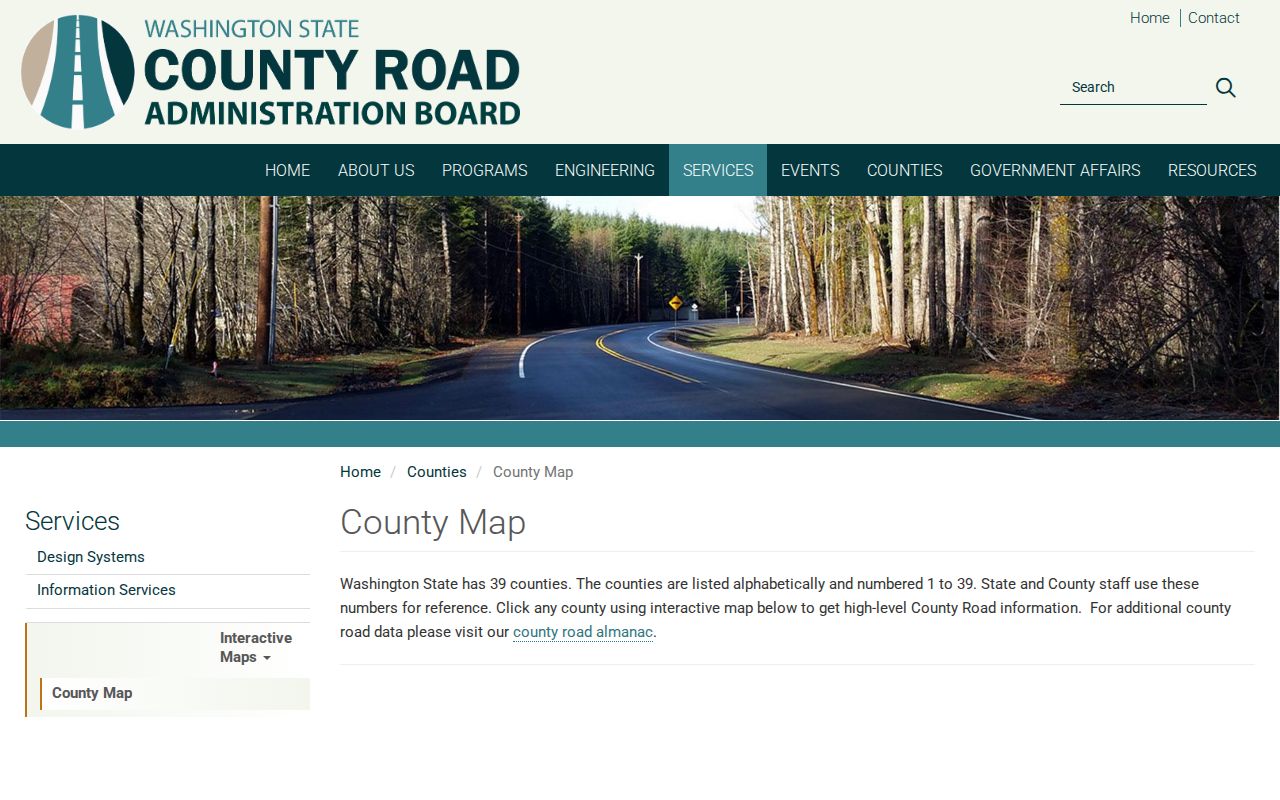
The map shows why a statewide search must often route back to a county source.
King County
Seattle · Largest Washington metro and court system
Pierce County
Tacoma · South Sound metro records
Snohomish County
Everett · North Puget Sound records
Spokane County
Spokane · Largest eastern Washington metro
Clark County
Vancouver · Southwest Washington metro
Thurston County
Olympia · State-capital county records
Browse the full directory of all 39 Washington counties to open the criminal records site for any county.