
Criminal Court Cases in Washington
Washington divides criminal work by court level. Each county has a Superior Court, and that court hears adult felony cases. District courts and municipal courts hear misdemeanors, gross misdemeanors, criminal traffic matters, and other limited-jurisdiction cases allowed by state or local law. The Court of Appeals reviews many trial-court rulings through three divisions. The Washington Supreme Court is the final state court and also adopts statewide court rules.
The clerk for the Washington court of record keeps the official Washington criminal case file. The Washington statewide judiciary indexes case and party data, but it does not become the custodian of every pleading or signed order. That split matters. A person may find a Washington case number in the Washington statewide search, then need the filing court for the complaint or information, probable-cause papers, hearing record, judgment, sentence, or certified copy.
Note: A Washington court index entry is a research lead; the signed order in the official court file controls.
Washington Criminal Courts by Level
The Washington charge and filing court guide the search. A felony is normally charged by information in Washington Superior Court. A Washington misdemeanor may begin with a complaint in district or municipal court. District courts also handle many warrants, probable-cause matters, and infractions. Appeals from limited-jurisdiction courts generally move to Washington Superior Court under the Rules for Appeal of Decisions of Courts of Limited Jurisdiction.
The charging paper has a precise role. An information is signed by a prosecutor and is common in a Washington felony case. A complaint is common in a limited-jurisdiction criminal case. An indictment is a grand-jury charge, but it is less common in Washington state practice. None of these terms describes the outcome. The later judgment, verdict, plea entry, dismissal, or acquittal does that work.
Searching Washington Courts Search Case Records
Washington Courts Search Case Records is the free Washington statewide reference index. It covers district, municipal, Superior, appellate, and Supreme Court data, but each Washington court may have a different system start date or migration path. The index normally refreshes within about a day. Its own warning says status, docket, judgment, and document links may be wrong, and it cannot provide an official outcome.
- Choose the court level. Start with Superior Court for a felony, or district and municipal courts for most misdemeanor matters.
- Select a name, business, or case-number search. A person search requires first and last names; middle name is optional.
- Pick the court and criminal case type. Add a filing year when it helps narrow a common name.
- Record the case number, court, filing date, and docket clues. Follow any notice that routes the case to a newer portal.
- Ask the filing court to inspect the file or supply plain or certified copies. The local clerk verifies the disposition.
| Field Label | Type | Required | Washington Search Notes |
|---|---|---|---|
| Court Level | Selector | Yes | District and Municipal, Superior, or Appellate |
| Search Type | Tab or selector | Yes | Name, business name, or case number |
| Court Name | Dropdown | Yes | Choose the court that filed or heard the matter |
| Case Type | Dropdown | Yes | Superior includes Criminal; limited courts split criminal types |
| Year Filed In/After | Dropdown | No stated | Years shown start in 1975, but local coverage varies |
| First and Last Name | Text | Yes for person | Middle name is optional and identity is not guaranteed |
| Case Number | Text | Yes for case search | Use the filing court's format |
The official Washington court search screen shows the level, court, type, and party controls used to begin a statewide search.
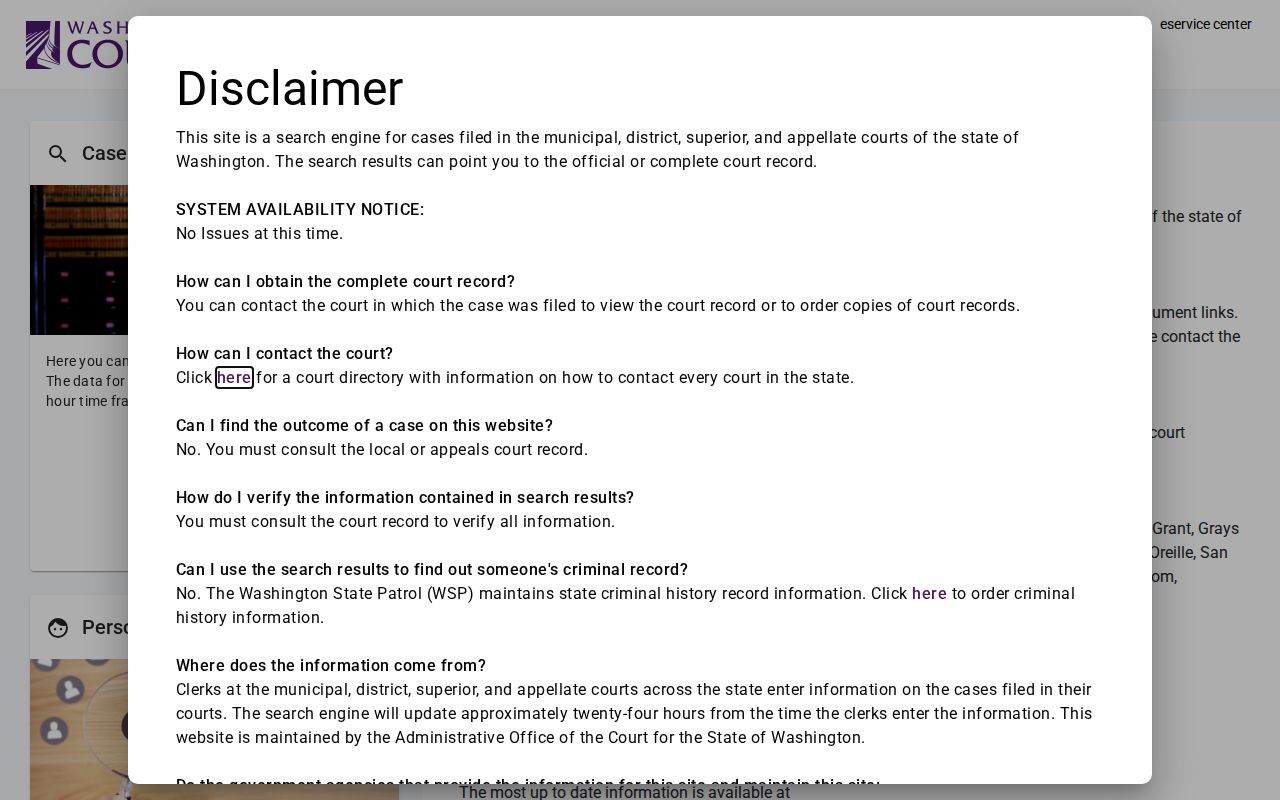
The screen demonstrates why the court level must be chosen before a Washington criminal case can be narrowed to the right docket.
Washington Court Case Portal Split
One Washington statewide index does not mean one statewide document portal. Odyssey Portal provides public case information for 37 Washington Superior Courts. Two Superior Courts use separate systems. District and municipal courts are also split, and several have local portals with fresher information. A growing group of limited-jurisdiction courts uses re:SearchWA. The Washington statewide home screen identifies which route applies.
The Odyssey interface illustrates the shared Superior Court layer used across most of Washington.
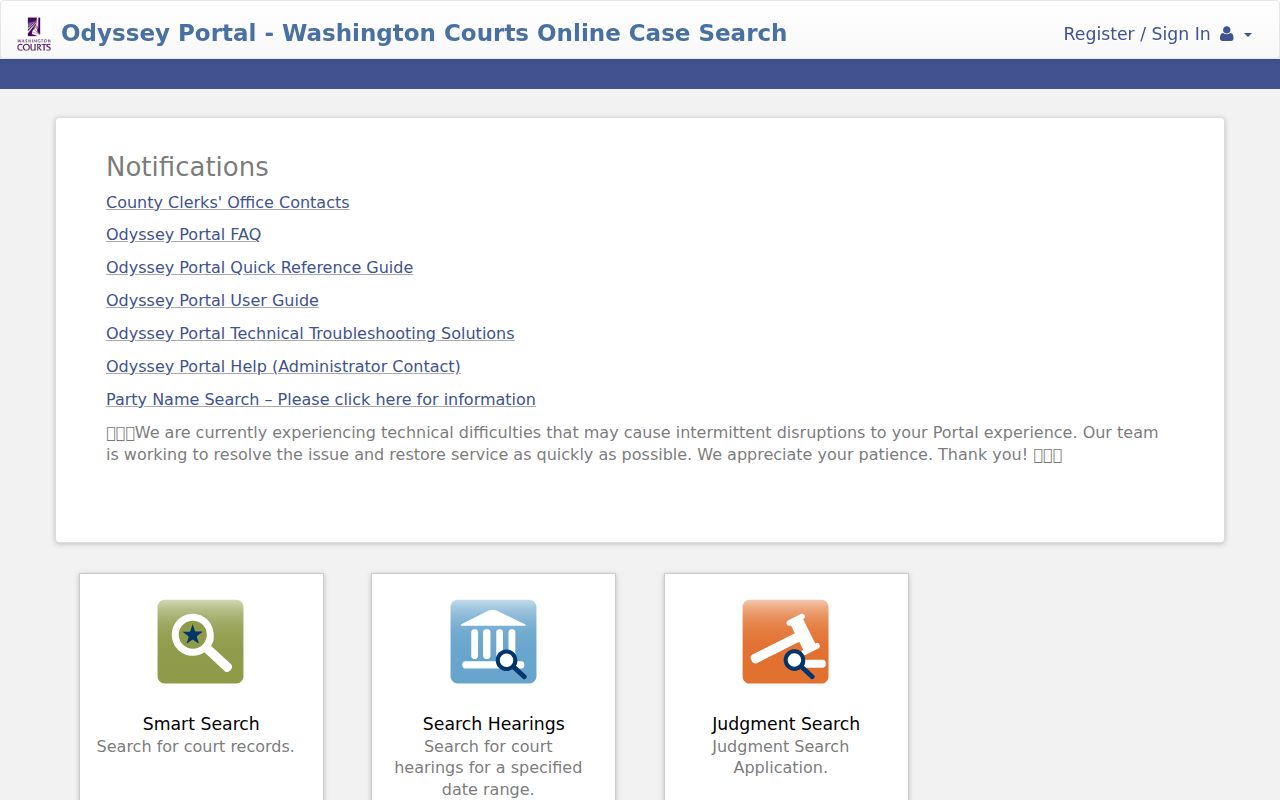
Anonymous users may see case information, but access to documents and role-based functions varies by court.
The re:SearchWA portal shows the separate migration path for specified Washington district and municipal courts.
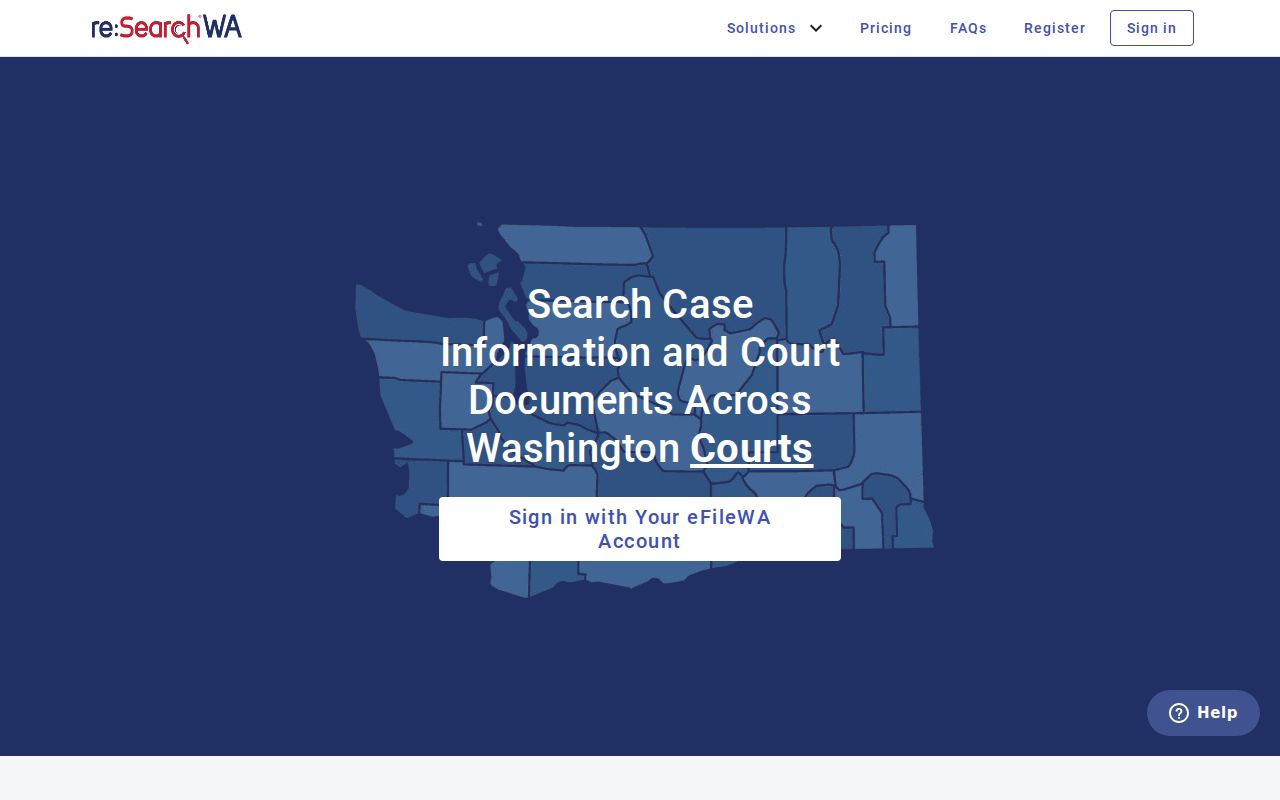
A missing limited-jurisdiction case may sit in a local system that has not moved, not in the portal being searched.
Note: Washington portal coverage follows the filing court, so repeat a search only after confirming the correct system and level.
Inside a Washington Criminal Case File
A Washington criminal case file follows a single Washington prosecution. It can contain the charging document, probable-cause material, motion practice, hearing entries, pleas, orders, judgment, and sentence. Public Washington portal views may expose only selected index fields. Victim and minor identifiers, Social Security numbers, restricted addresses, medical or evaluation records, sealed documents, and other protected data may be withheld or redacted.
| Case Number & Court | Identifies the filing court and the docket used to request the official Washington file. |
|---|---|
| Charging Documents | Shows the filed complaint or information, the alleged statutes, and later amendments. |
| Docket Entries | Chronologically lists filings, orders, warrants, and court events, though index detail varies. |
| Hearing Dates | Records scheduled and completed appearances, sometimes with the judicial officer. |
| Disposition | May identify dismissal, acquittal, plea, verdict, conviction, or later vacation. |
| Sentence & Judgment | States the court's signed result, confinement, community custody, restitution, and legal financial obligations. |
A Washington court file is not a statewide rap sheet. It describes one docket in one court. The WSP record compiles reportable arrest cycles and dispositions sent from agencies and courts across Washington. Each product can contain detail the other lacks.
Washington Case Index Limits
The Washington statewide index expressly cannot tell a reader the official outcome. A Washington result labeled pending may have a later order that was not linked, was entered under a corrected case record, or has not yet reached the index. Older Washington files may require staff retrieval. A sealed record may not appear in an ordinary public search. A name match can also refer to another person.
GR 31 controls Washington court access. Court records are presumptively public subject to court rules, statutes, and sealing orders; an agency Public Records Act request is not a substitute for asking the court.
JIS-Link is a fee-based statewide court-information service, priced in the research at $0.145 per transaction plus its account terms. It is another information layer, not the source of certified court documents.
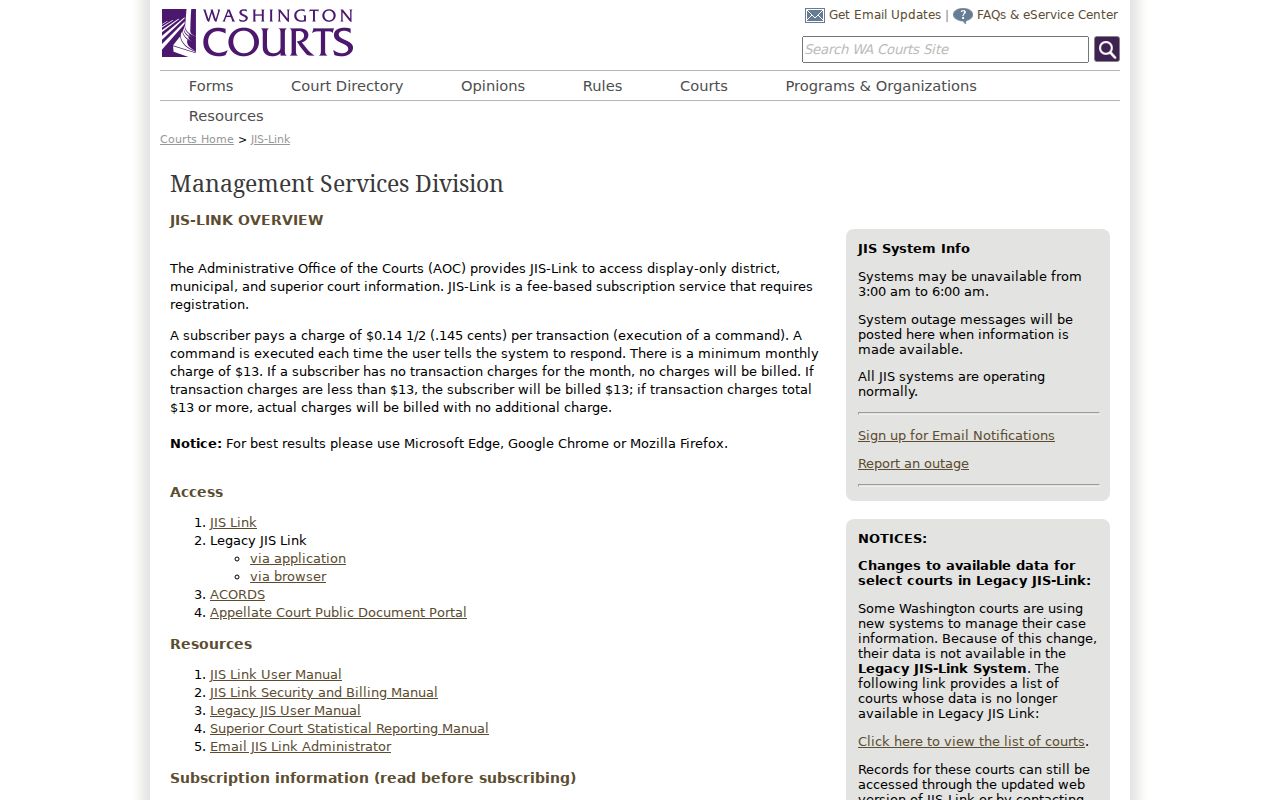
The JIS-Link view underscores the difference between statewide access tools and the Washington court that owns the signed file.
How a Washington Criminal Case Moves
A custodial arrest can create booking and probable-cause records before a prosecutor files a Washington criminal case. The prosecutor then chooses whether and what to charge. At the first appearance, the court addresses probable cause and release. Arraignment records the plea. Discovery, motions, negotiation, competency review, or diversion may follow. A plea or trial leads to a disposition, and a conviction can lead to judgment and sentence.
Case flow: Charges Filed › Arraignment › Pretrial › Plea or Trial › Disposition › Sentencing
Each step leaves different Washington court records. A Washington docket entry can show that a hearing occurred, while the filed motion or signed order explains what happened. An appeal moves review to a higher Washington court but does not erase the trial record. Later motions to vacate or seal also belong to the sentencing court and create their own orders.
Note: A Washington booking charge may change before filing, so compare the charging document with the later signed judgment.
Reading Washington Case Dispositions
Washington disposition words are not interchangeable. Dismissed means a charge ended without a conviction, sometimes with the chance of refiling. Acquitted means a not-guilty result after trial. Guilty marks a qualifying plea or verdict. Vacated means a Washington court later granted statutory relief; it does not mean the underlying event never happened, and it does not automatically seal the public docket.
- Arraignment
- The Washington hearing where the accused is advised of the charge and enters a plea.
- Disposition
- The procedural or final outcome attached to a charge.
- Deferred prosecution
- A treatment-linked statutory deferral used in some misdemeanor matters, not an acquittal.
- Community custody
- Washington DOC's term for many periods of postrelease community supervision.
- Vacating
- A court process that sets aside a qualifying conviction and dismisses the charging document without automatic sealing.
Read the signed judgment or dismissal order when the distinction matters. A bare Washington index label may omit amendments, count-level outcomes, or the date of later relief. The Washington State Patrol may also need a final disposition report before its compiled history reflects what the court has already done.
Fixing a Washington Case Status
If a Washington court search shows the wrong status, first verify the Washington case number and filing court. Then obtain the latest signed order from that court. Ask the clerk whether the Washington docket itself is wrong or only the statewide index is stale. If the court record is right but the WSP history is not, the court or prosecutor may need to resend the disposition, or the record subject may need to provide certified source proof during a WSP challenge.
Washington Courts' record-finding instructions route people from an index result to the court that can inspect and copy the official file.
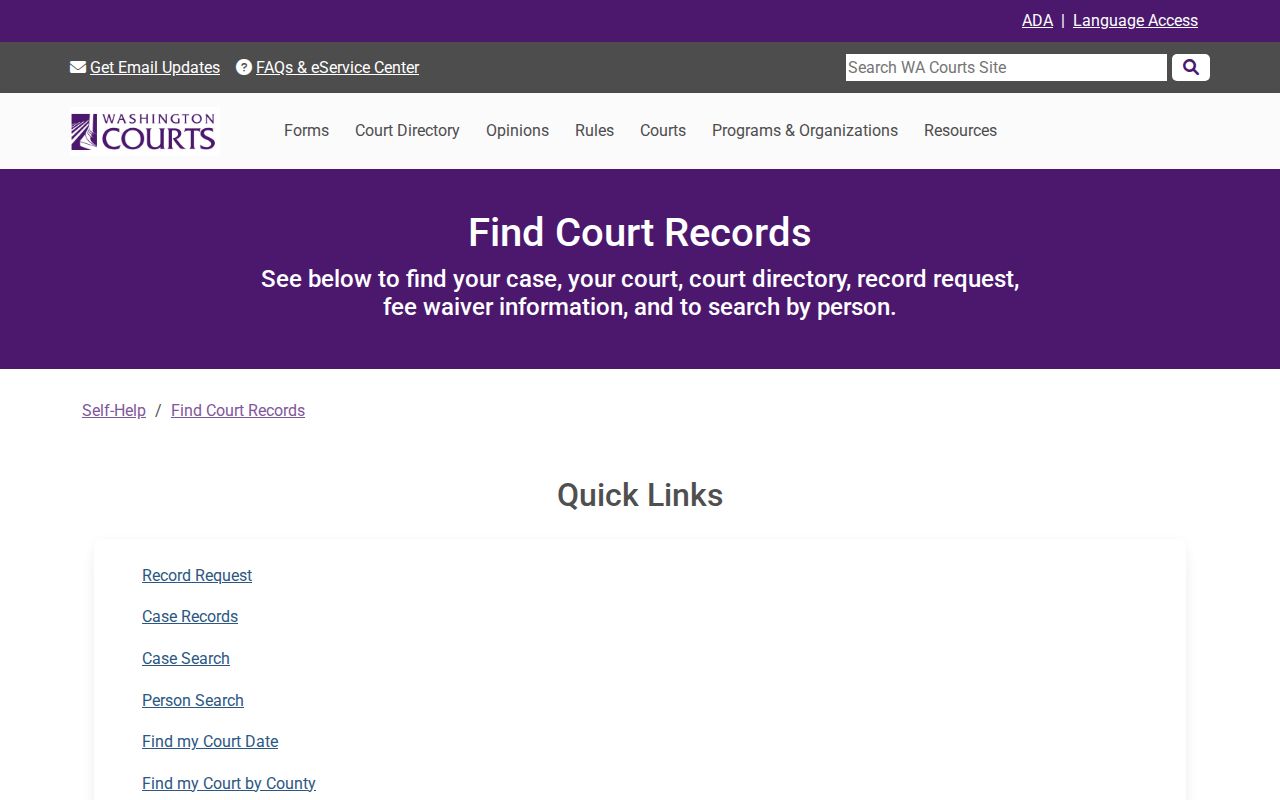
The guidance makes the clerk route explicit, which is vital for old, archived, sealed, or non-migrated Washington cases.
Case Records at the County Level
Washington has no single clerk for all criminal cases. The official Washington felony file sits with the Superior Court clerk in the county where it was filed. District and municipal records stay with those courts. The local Washington court supplies pleadings, orders, judgments, and certified copies, and it can explain retrieval methods for archived records. Local fees and remote-document access may differ.
Start with the statewide index to identify the court. Then browse the full directory of all 39 Washington counties to reach the right local criminal-records site. That route is also useful when a portal points to a separate local system or when a court file requires a mail, counter, or terminal request.
Note: The county route is required for official Washington case documents even when the statewide index finds the docket.
Washington Case File or Rap Sheet
A Washington criminal case file and a WSP rap sheet answer different questions. The Washington case file shows the filed allegations, motions, court events, signed rulings, and result in one court. The Washington State Patrol compiles reportable conviction history and certain recent pending fingerprinted arrests from many agencies. It may omit an event that was never reported or linked, while the local Washington court still has the docket.
Use the case file to understand what a Washington court actually ordered. Use the official Washington State Patrol criminal-history process to review the statewide compiled record. Neither replaces the other. When they conflict, return to the source court, get the signed disposition, and use that document to seek correction in the downstream system.